
Heat as the primary energy source
Instead of burning fuel or drawing heavy grid power, the Ring Regenerator™ extracts ambient thermal energy from the surrounding air to drive desiccant regeneration.
Grid-Independent Renewable Energy Systems
Kazadi Enterprises is reducing the energy requirements of air conditioning and brine reduction for mineral recovery by using environmental heat as a primary energy source.
The idea
Long before pumps and compressors, coastal communities let the sun and warm sea air evaporate seawater across shallow pans — concentrating brine and harvesting salt with nothing but the heat that was already in the air.
Kazadi Enterprises modernizes that ancient principle. We capture the same environmental heat — the latent thermal energy held in everyday air — and put it to work as a clean, continuous, grid-independent energy source for industry.
The energy was always there. We simply learned how to harvest it.

Technology
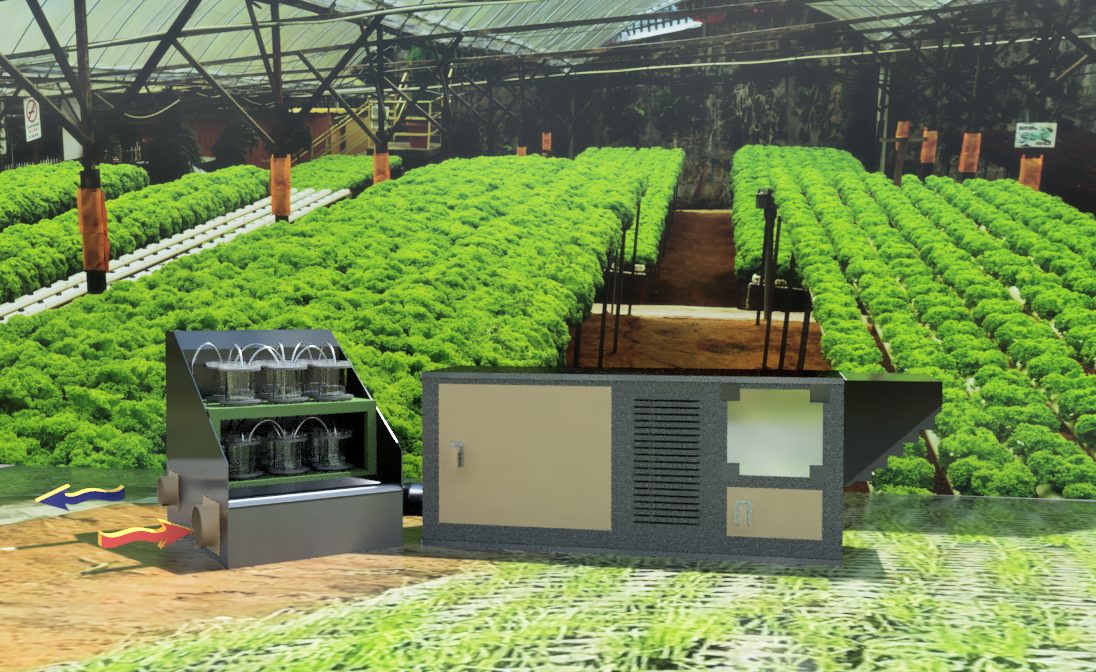
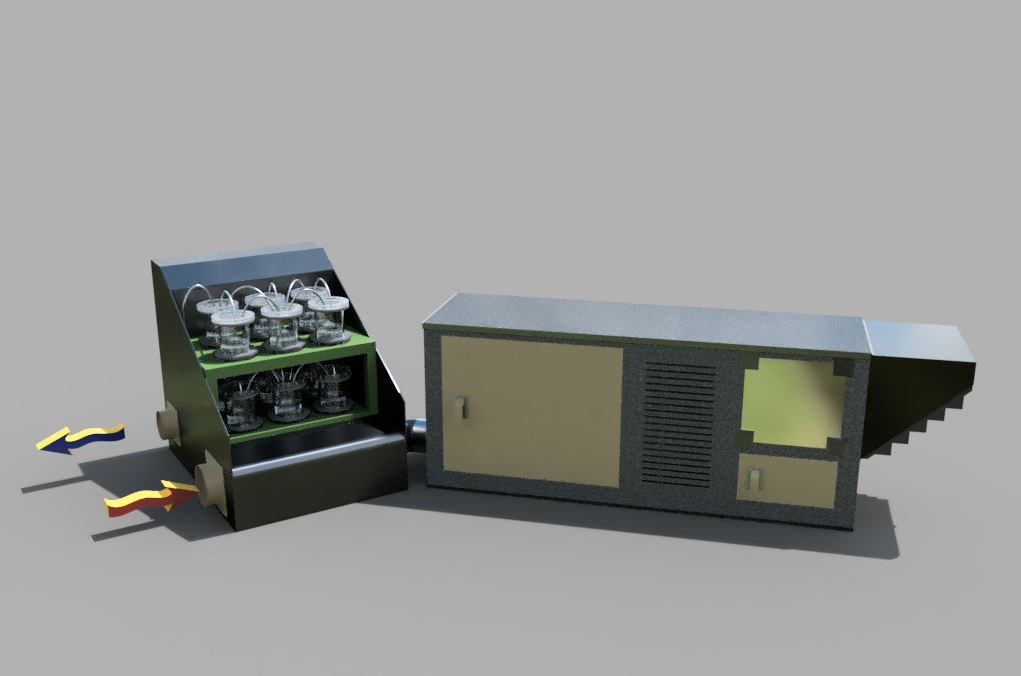
A patented device that harvests ambient thermal energy from the air and uses it to regenerate the liquid desiccants at the heart of a Liquid Desiccant Air System (LDAS) — turning environmental heat into useful work.
Instead of burning fuel or drawing heavy grid power, the Ring Regenerator™ extracts ambient thermal energy from the surrounding air to drive desiccant regeneration.
Built on patented technology and two decades of research. The regenerator integrates with standard LDAS dehumidifiers and other thermal processes.
Designed for easy installation alongside existing equipment — a modular, grid-independent unit that lowers costs while improving performance.
The same harvested heat can drive cooling, dehumidification, brine reduction, refrigeration, heating, water purification and electrical power.
The value
Pairing an LDAS dehumidifier with the Ring Regenerator™ can cut conventional energy use dramatically — without sacrificing the precise humidity control that energy-intensive industries depend on.
Potential reduction in conventional energy use
Of research behind the technology
Grid-independent operation
Applications
Environmental heat can power the most energy-hungry processes — wherever humidity, temperature or concentration must be precisely controlled.
Liquid-desiccant climate control that maintains setpoints with a fraction of the energy.
Concentrate brines and recover valuable minerals using harvested heat instead of costly evaporation.
Reliable, grid-independent cooling for storage, transport and processing.
Stable humidity and temperature for safer, higher-quality production lines.
Greenhouse and indoor-farm climate control that protects yields and margins.
Thermally driven separation and purification from a renewable heat source.
Useful heat delivered where it is needed, without fossil combustion.
Convert harvested environmental heat into clean, grid-independent power.
Why Kazadi
The science behind the Ring Regenerator™ is the result of more than twenty years of focused research into how environmental heat can be captured and converted into useful work.
That work has been recognized and validated through a U.S. Department of Energy entrepreneurial fellowship, hosted at Argonne National Laboratory — bringing national-lab rigor to a technology built for the field.
About
Founded in 2020 and based in Batavia, Illinois, Kazadi Enterprises develops grid-independent renewable energy systems for the world's most energy-intensive industries. Our mission is simple: take the heat that is already in the air around us and turn it into clean, useful work.
We serve food processing, controlled environment agriculture, mineral recovery and brine operations, and the broader industrial sector — anywhere humidity, temperature and concentration must be tightly managed. By replacing fuel and grid load with harvested environmental heat, we help operators lower costs, improve performance, and shrink their carbon footprint at the same time.
Backed & validated by

Techstars 2024
Selected into the Techstars accelerator network in 2024, connecting Kazadi to mentorship, capital and a global cleantech community.
U.S. Department of Energy
Entrepreneurial fellowship validating the technology and its path to commercialization.
Argonne National Laboratory
National-laboratory host for the DOE fellowship, bringing world-class facilities and expertise.
Join our pilot program or start with a free energy assessment to see how much the Ring Regenerator™ could save your operation.
Contact
Tell us about your facility and the humidity or thermal challenge you're solving. We'll show you what harvesting environmental heat could do for your costs and performance.